
The tagedy of the compromised craft

This is Part 2 of a 5-Part Systems Blueprint.
If you landed on this page, you are in the middle of a progressive narrative. It will make far more sense if you start from the beginning.
Go to Part I – The Devaluation and follow the sequence back here.
If you have already read the previous parts – let us proceed.
Let’s be honest. Delivering a comprehensive, elite-level campaign requires a massive amount of manual execution. But on a typical monthly retainer, you cannot ethically spend that kind of time without bankrupting your own practice. So, you are forced into a corner.
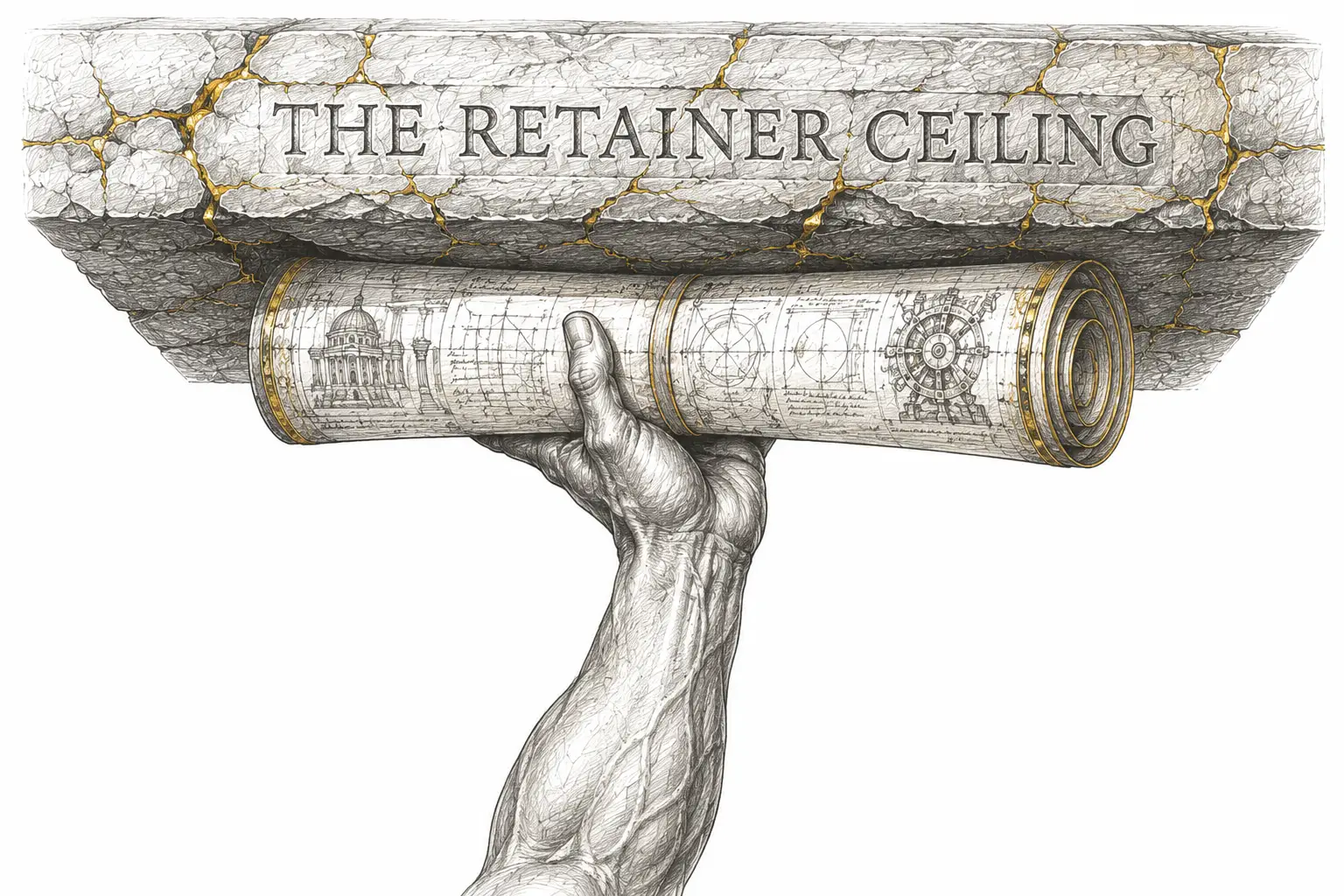
The retainer ceiling
You want to deliver world-class work. You have spent years refining your taste, your judgment, and your strategic logic.
But you are bound by the brutal physics of the clock.
To protect your margins and survive, every minute must be accounted for. If you spend 20 un-billed hours to deliver at a higher level (the level of execution you know are capable of), you have to absorb the loss.
So, you are forced into a painful compromise.
You work within the tight limits of the client’s monthly retainer, delivering baseline execution because you cannot afford to donate unpaid labour. You end up shipping “good enough” work to fit their budget.
Historically, it has been impossible for an independent marketer to execute at a truly elite level – because clients simply refuse to pay for the days of manual human effort it really requires.
You know exactly what a client’s campaign needs to maximise ROI. But you are forced to hold back your best strategic thinking and sacrifice meticulous creative execution simply because the economics won’t support it.
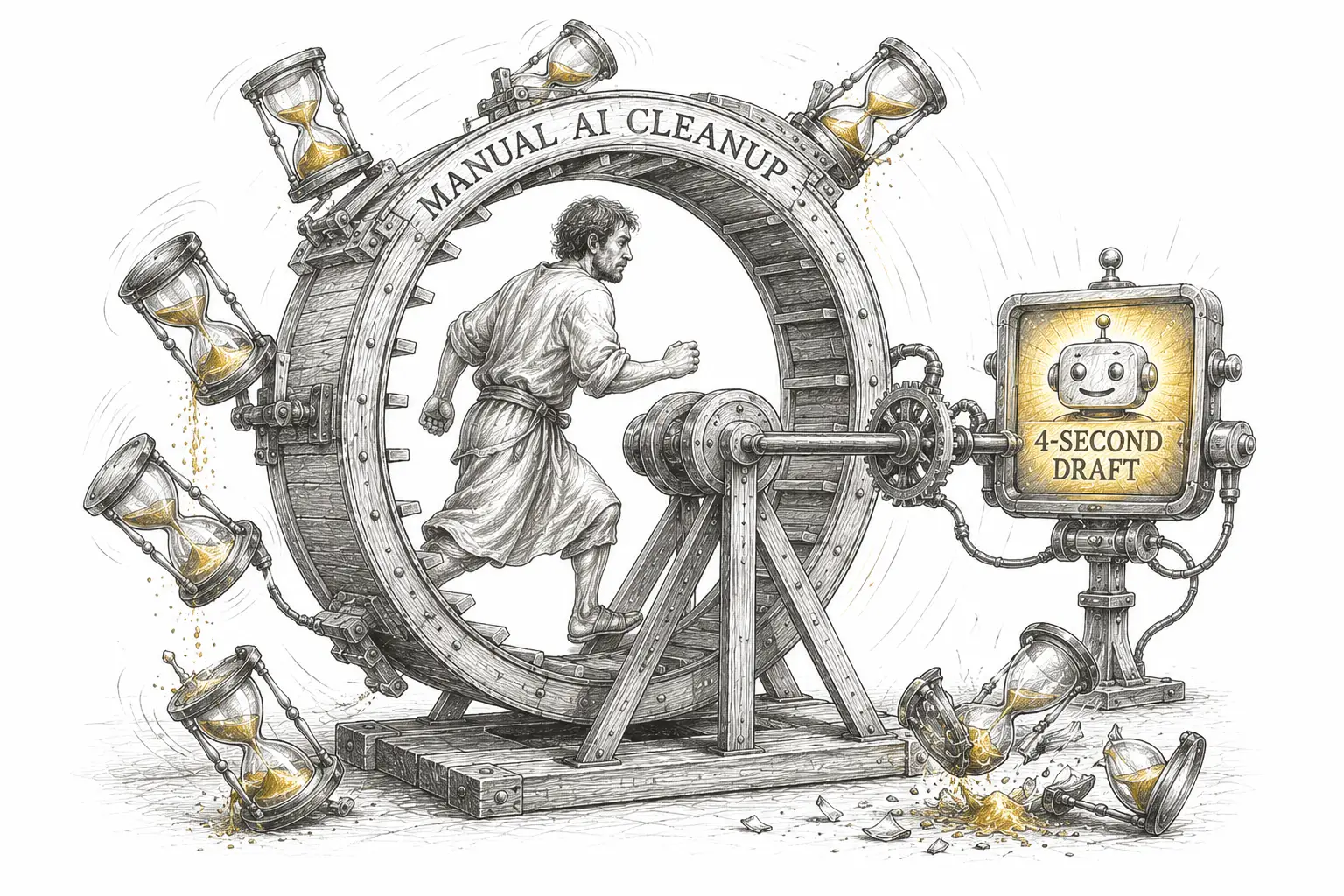
The AI babysitting grind
When standard AI chatbots arrived, you thought you found the escape hatch.
You opened Claude or ChatGPT, hoping to find the strategic leverage you were promised. You expected the tools to take the manual weight off your shoulders.
Instead, you traded one manual treadmill for another.
You find yourself staring at your screen late into the evening. You sit with red eyes, a stiff neck, and the sheer frustration of manually rewriting boilerplate AI drafts.
Sure, the chatbot spits out a campaign layout in four seconds. But then you have to spend forty minutes editing the stiff, clinical text simply to protect your professional reputation. (Because the moment a client spots standard AI terms like “delve” or “tapestry” in your deliverables, your authority is dead).
You have traded your manual writing hours for manual editing hours.
You end up spending more time babysitting a machine and fixing robotic drafts than you are running the elite campaign strategy your clients are paying you for.
This is the sickness of stamina.
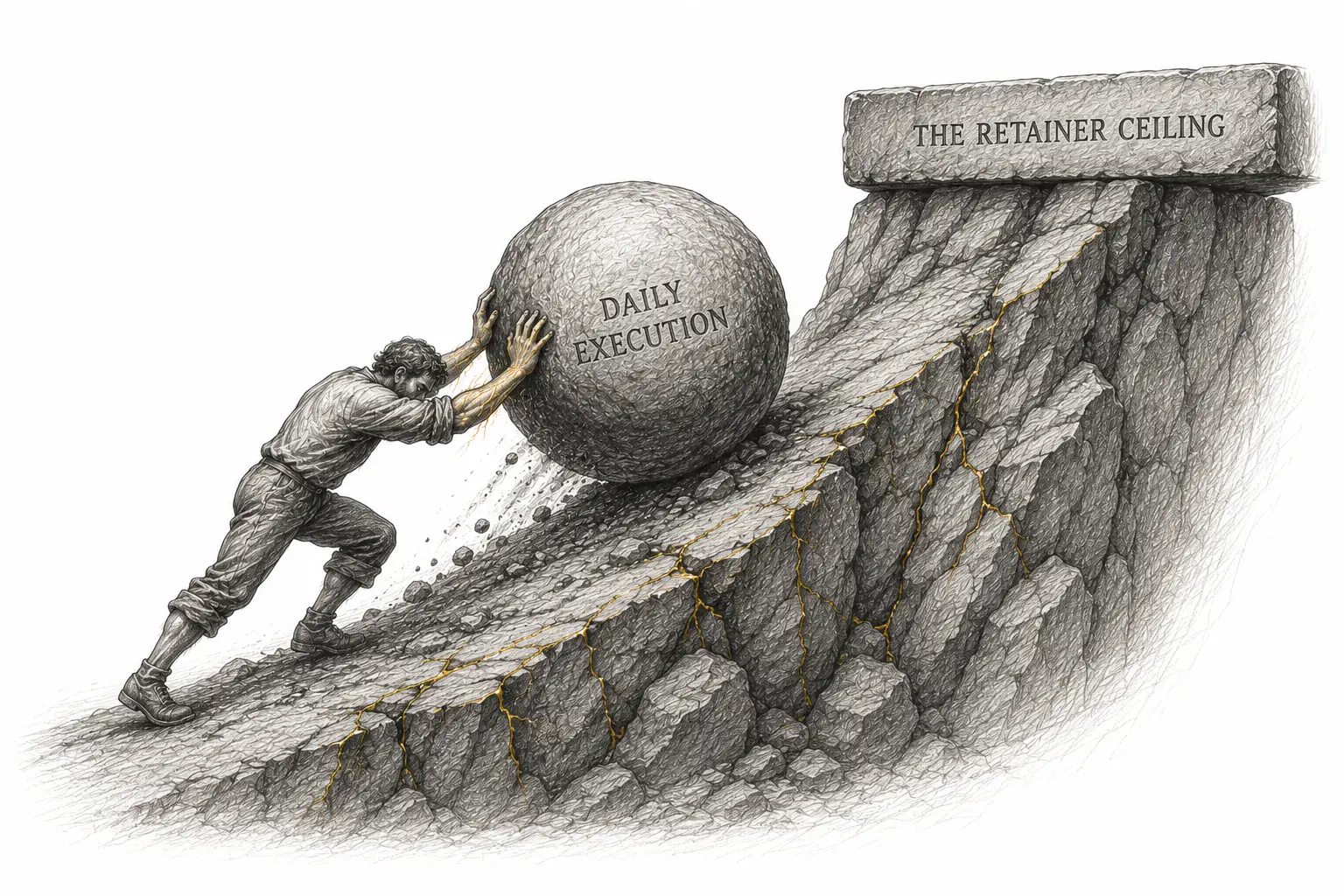
The sickness of stamina
Your business income is directly tied to your daily physical energy. Every unit of revenue requires a matching unit of your personal, metabolic stamina.
We spend our days on low-status execution – sifting database errors, formatting client dashboard decks, and chasing emails – instead of high-status strategic thinking.
And now, the market expects you to operate at a superhuman level daily. There is a quiet, constant pressure to deliver faster answers, sharper insights, and endless creative variations.
If a machine can generate standard, average advice in seconds, how do you defend your authority? How do you protect your high-status position when clients assume human experts are becoming obsolete?
You run on pure physical stamina, trying to out-think automated systems while navigating the daily operational friction of running a business in South Africa. The pressure is constant. And the moment your personal energy dips, your campaign performance decays and client retainers begin to churn.
The false solutions
When the sickness becomes too painful to ignore, you try to fix it.
Naturally. We are entrepreneurs. But when you turn to conventional, off-the-shelf workarounds, you simply build new bottlenecks.
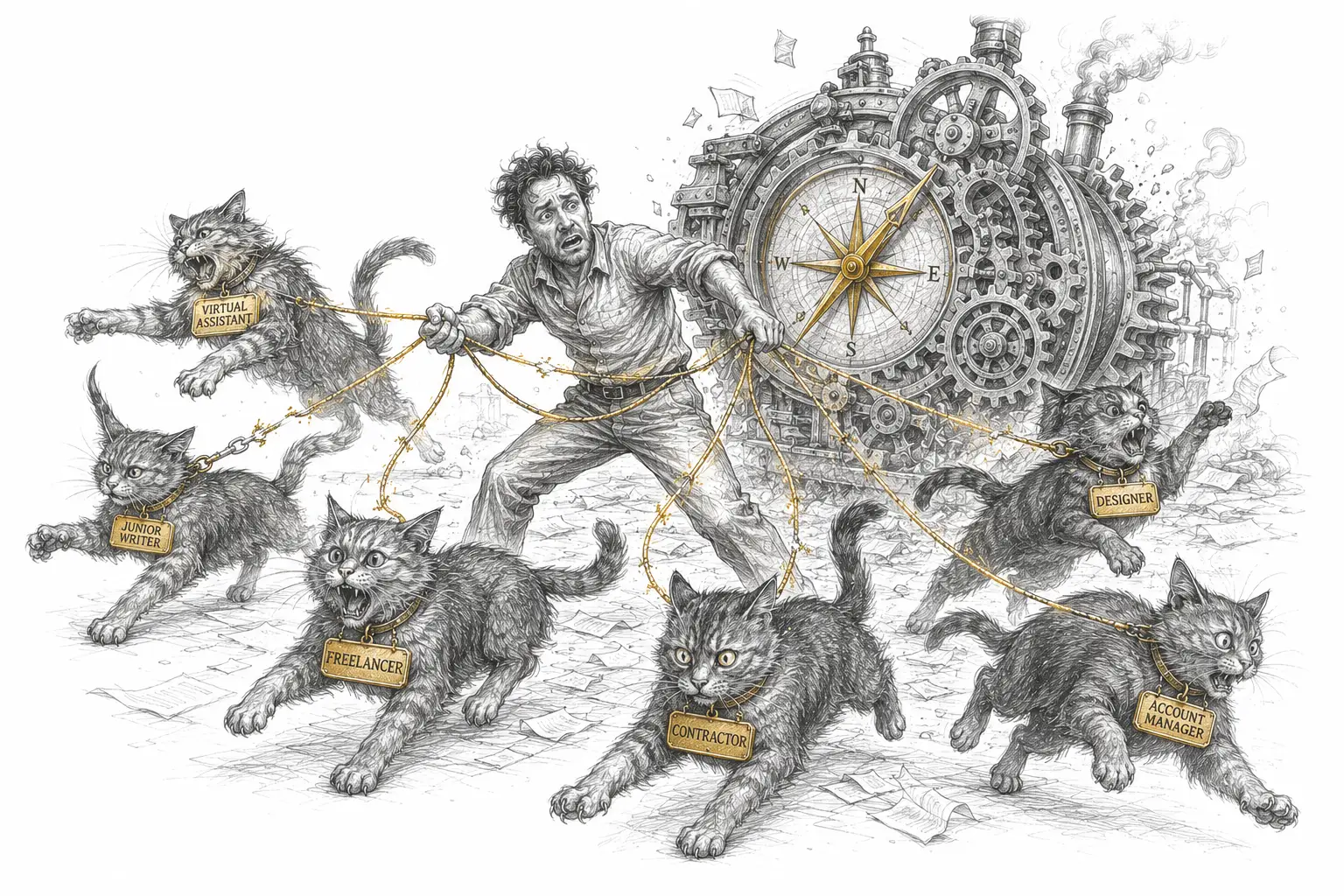
The Headcount Trap
Make no mistake. As a human-first marketer, I am not against employing people, building teams, or creating jobs.
I respect human talent. Great businesses are built on great people.
The trap is not hiring people. The trap is using human headcount as a band-aid for an un-codified system.
No staff member, freelancer, or virtual assistant can read your mind. So, when your unique taste, strategic logic, and professional standards live entirely in your head, you hire them expecting freedom, only to realise you have traded your delivery hours for management hours.
Instead of doing elite work as a strategic marketer, you become a supervisor herding cats – fixing junior mistakes, managing payroll, and editing work that lacks your standard of quality.
Throwing bodies at a systems problem doesn’t work. It increases your operational drag, shrinks your margins, and keeps you trapped at your screen fixing other people’s work.
Great people deserve great systems.
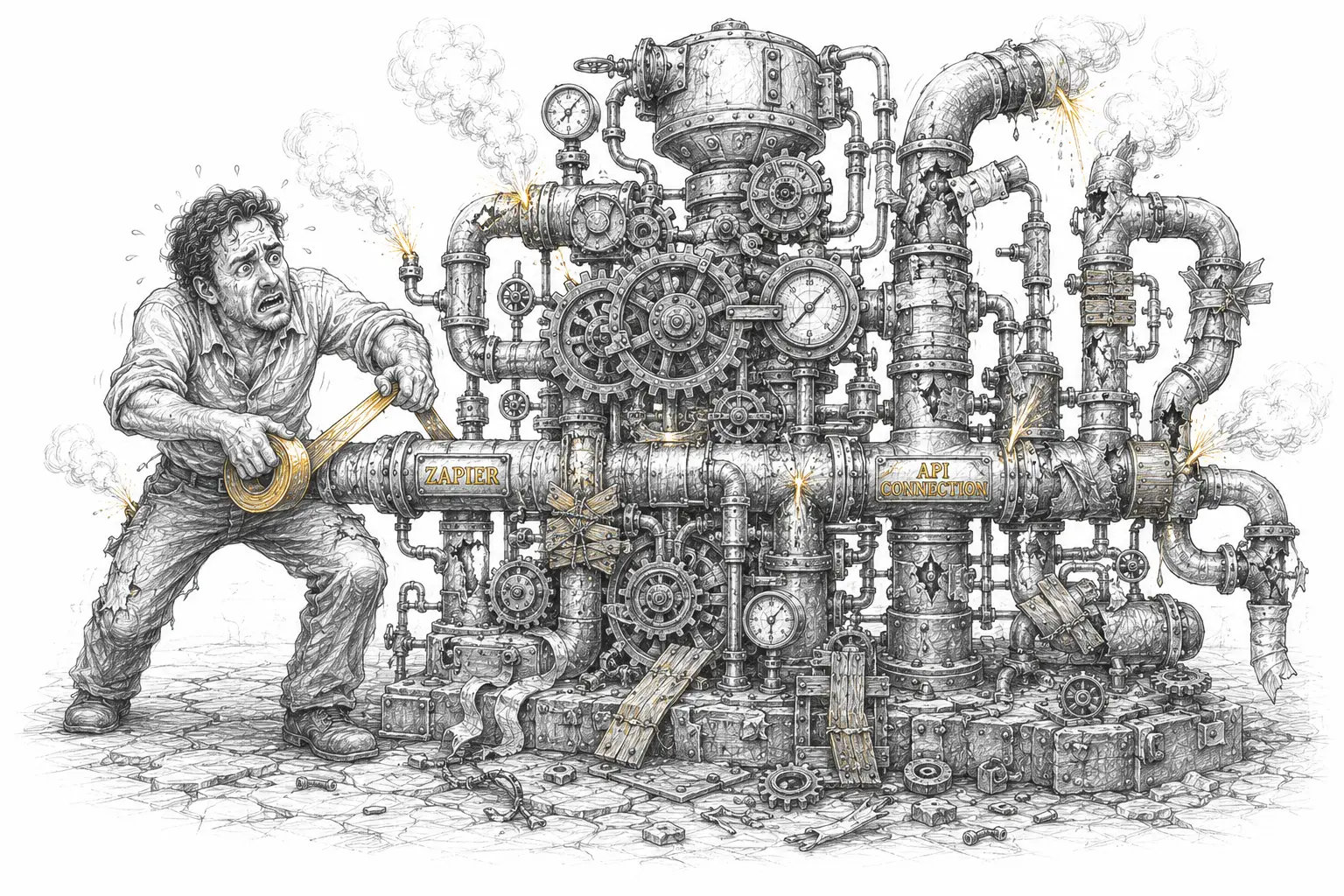
The Patched-Together Stack
Next, you try the automation route. You piece together fragile webs of integrated, third-party software connections with Zapier, hoping technology cures the friction.
But because you are not a software developer by trade, you do not know when you are moving in the wrong direction. And every time standard APIs update, your connections break.
You end up in a high-stress operational jam, spending your weekends debugging fragile webhook logs and API errors instead of chilling. (And let’s be honest – you didn’t start a business to spend your weekends on technical support forums).
You are working harder than ever before – managing more people, clocking more hours, editing more robotic slop, and spending more money.
The conventional solutions have simply worsened the sickness. You are standing on a burning platform.